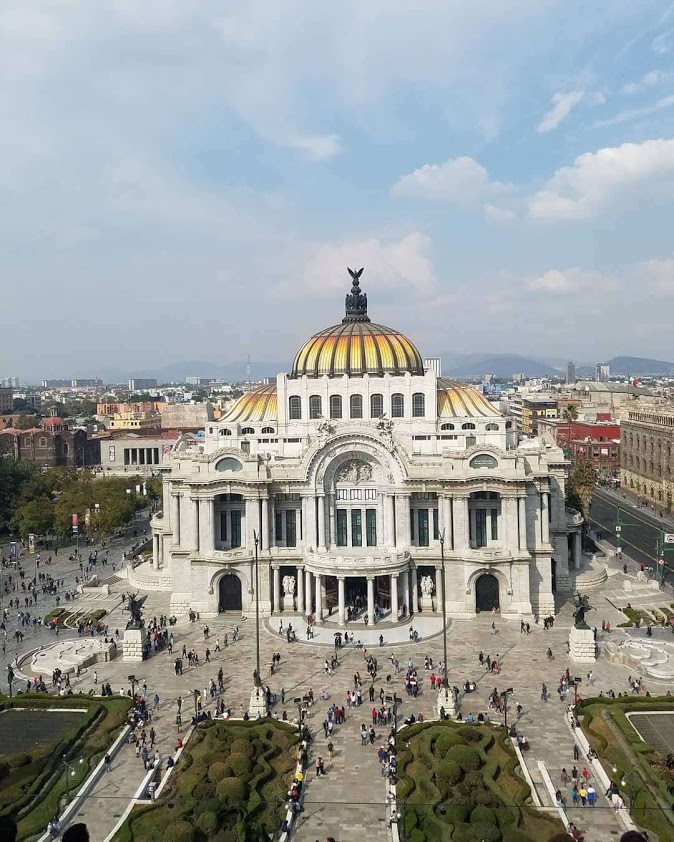
Palacio de Bellas Artes is one of Mexico’s prize possessions. The translation in English would be palace of fine arts because of the prominence of the art that it houses.
If you were on a 24-hour layover in Mexico City, Bellas Artes would be the place to visit. It is a cultural hub with its exterior having old world influences of European and Indigenous ancestry.
Your senses are overloaded when you first see the structure up close because you do not know where to look or comprehend what you are looking at. The exterior has Mayan deities’ statues and mythological goddesses sculpted from Italian artist Leonardo Bistrolfi. It is dominated by Art Nouveau design reflective of the period of 1910.
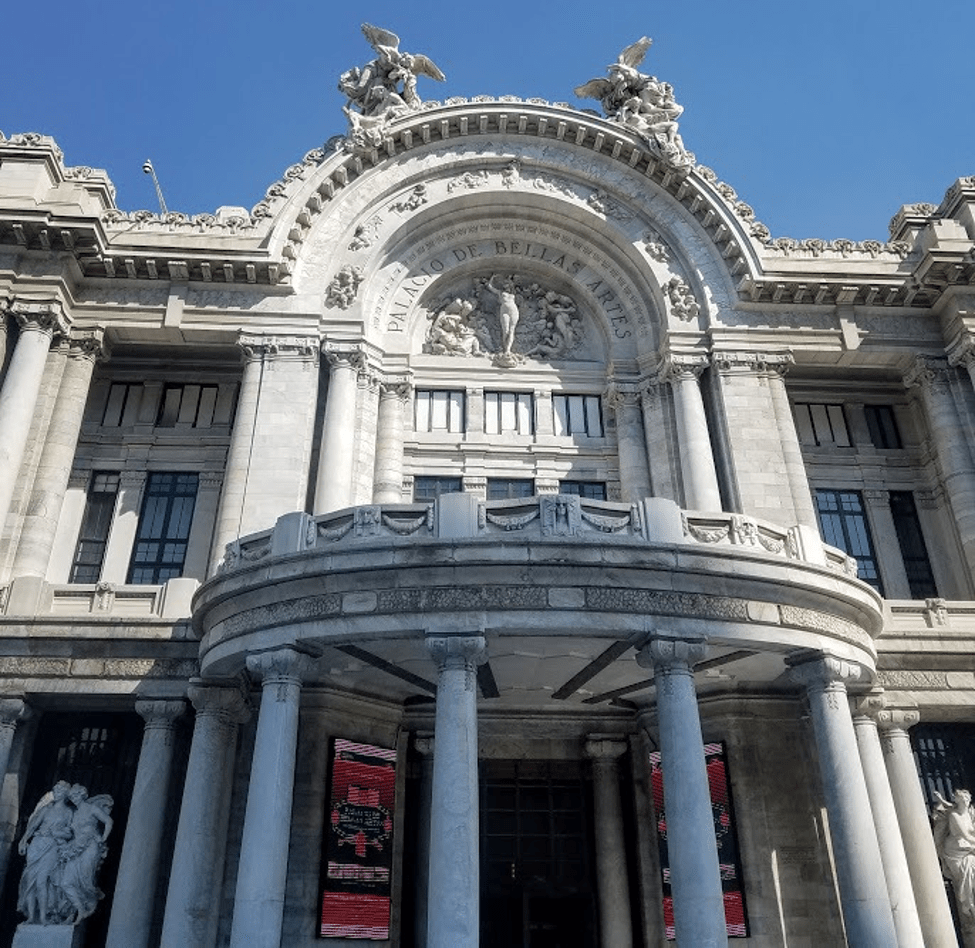
The interior of the building is influenced by modern art with murals from renowned Mexican artists, such as Siqueiros and Diego Rivera, but it also styles in the contemporary design of the 1930s -Art Deco.
Italian white marble is the primary material used for the interior and exterior of the structure. For that reason, the dense construction continues to slowly sink-approximately 3-4 cm every year.
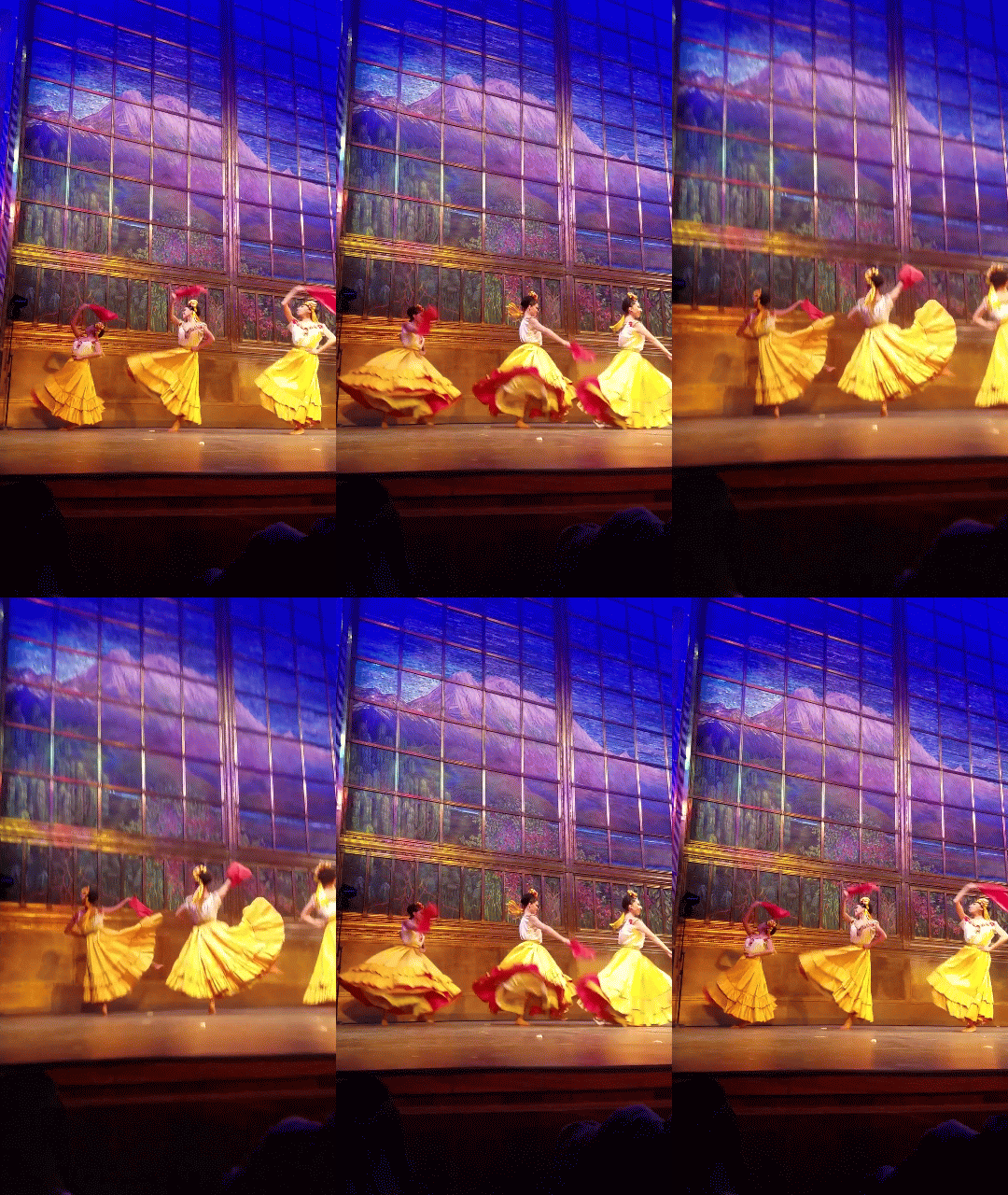
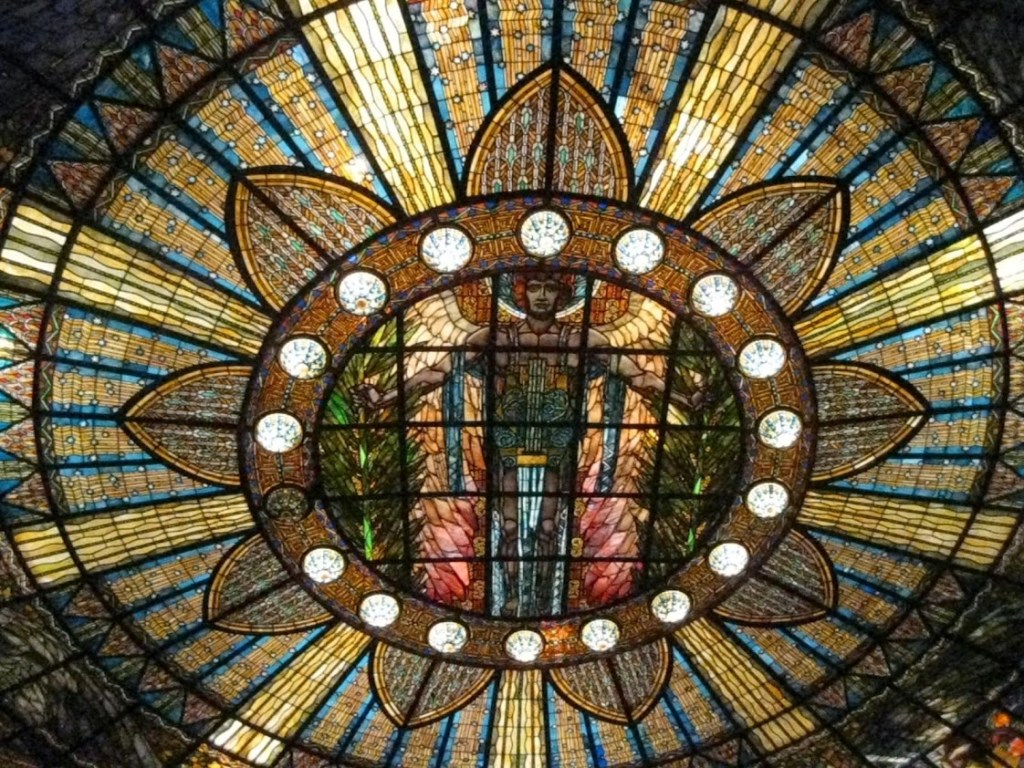
I would personally recommend seeing a show to see the interior of the theater, which has a beautiful glass curtain made by Tiffany & Co in 1912. The mosaic is reflective of Mexico City’s mountainous landscapes.
Amalia Hernandez’s Ballet Folklorico de Mexico is a world-renowned show that uses Mexican folk dance with ballet characteristics. The show has performed in Bellas Artes without interruptions every Wednesday and Sundays since 1960. The most economical tickets cost about $20 and are on the very last balcony, but they give you a bird’s eye view of all the action.

The theater was commissioned by President Porfirio Diaz in 1904 for a deadline of September 1910 for the Centennial of Mexican Independence. President Diaz became influenced by French design and wanted this building to be representative of that.
Unfortunately, complications arose due to the massive structure provoked the structure to sink into the soft soil and caused delays. Ultimately, the start of the Revolutionary War stopped construction completed. It remained untouched for 20 years.
In 1930, President Ortiz Rubio appointed a new architect, Federico E. Mariscal, to oversee and finish construction, which ended four years later. The building changed its name from National Theater (Teatro Nacional) to Palacio De Bellas Artes. The magnitude of the building caused a conceptual change from a theater to a cultural center of education.
All pictures were taken by me using my Galaxy s7 😀

 Debunking Mexican Myths
Awesome photos and summary! I want more!
LikeLiked by 1 person
Thank you! I will have another post this week. Hope you enjoy the next post.
LikeLike
Very informative I had no idea the building was sinking how scary!
LikeLike
Yes, most buildings in Mexico are sinking because of the soft soil. Check out my other post and it explains it better. Thank you for the comment. 😀
https://justsouthofthemoon.travel.blog/2020/02/20/new-venice/
LikeLike